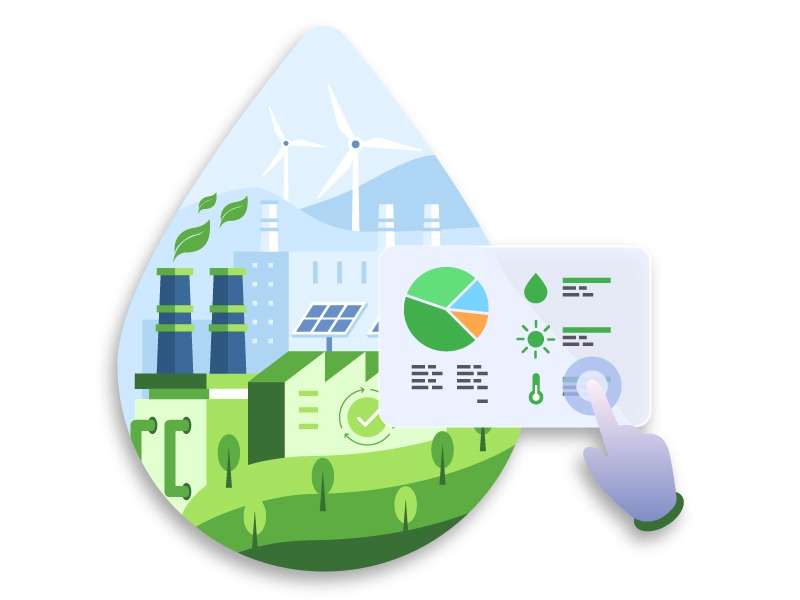
One example of Energy AI Platform implementation is the management of chiller systems in large commercial buildings with complex energy usage and strict system reliability requirements. The platform serves as a centralized hub, integrating data from cooling and core utility systems to support intelligent analytics and decision-making.
Key outcomes include:
- Significant reduction in chiller energy consumption through operation aligned with actual demand
- Improved equipment efficiency and extended asset lifespan by minimizing unnecessary operation and improper start–stop cycles
- Transition to data-driven energy management, with actionable insights supporting both operational teams and executives
- Reduced building greenhouse gas emissions, with support for energy and carbon KPI tracking and reporting
- Enhanced productivity through Generative AI capabilities that assist in report generation, data summarization, and decision recommendations, reducing manual effort and saving time